Warm-up
Sitting Triceps Stretch on a Chair
180 seconds
Sit tall towards the front of a sturdy chair with your feet flat and hip-width apart. Breathe in and lift both arms overhead, then bend one elbow so that hand drops behind your head towards your upper back. Use the other hand to gently press the bent elbow back until you feel a stretch along the back of your upper arm. Exhale as you settle into the stretch, letting your pelvic floor relax and keeping your ribs soft rather than flaring. Keep your head tall, don't push your neck forward, and ease off if your shoulder pinches. Hold for a few slow breaths, then switch arms.
Glute & Core Activation
180 seconds
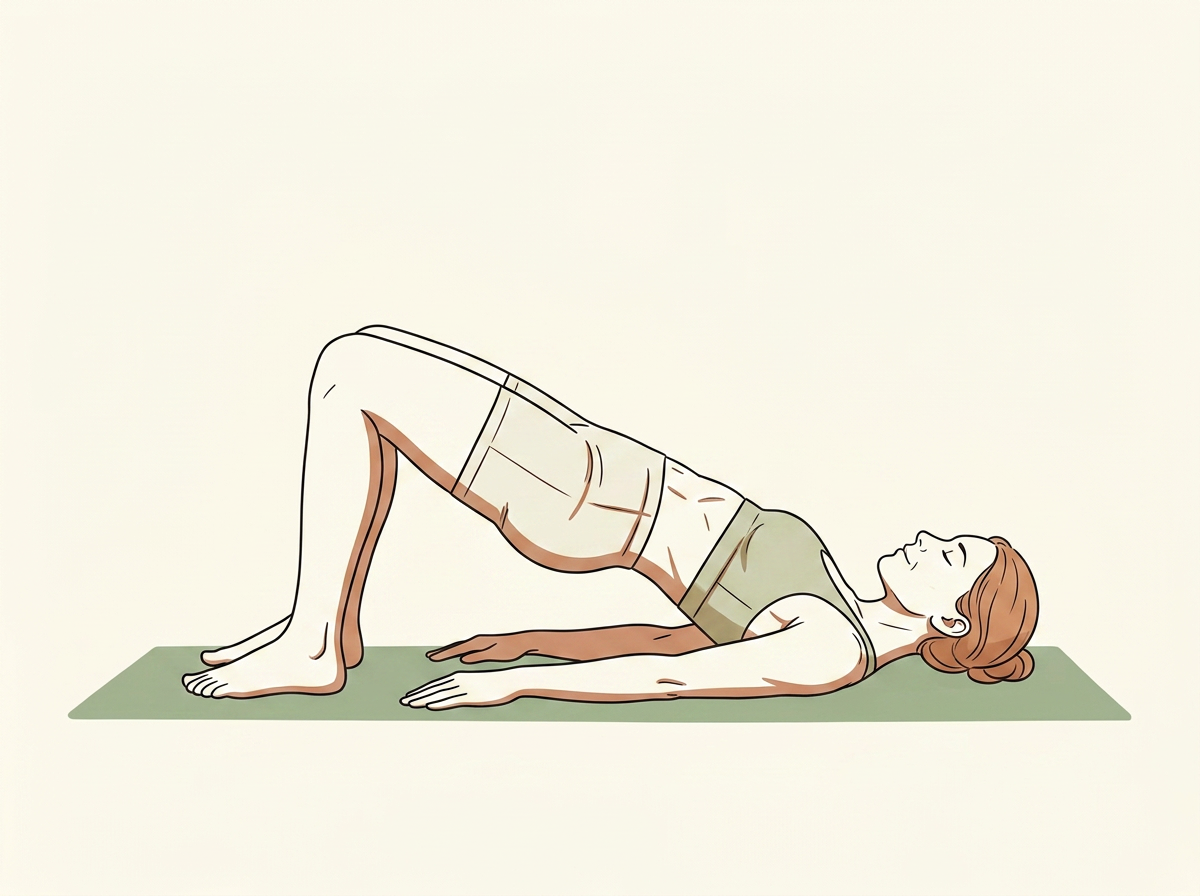
Lie on your back with your feet hip-width apart and a resistance band tucked just above your knees. Press your lower back lightly into the floor as you lift your hips, keeping your ribs tucked toward your pelvis to engage your deep core. Exhale steadily as you lift or extend your limbs to manage internal pressure and protect your pelvic floor. Focus on a strong squeeze in your glutes and a steady tension through your midsection rather than arching your spine. Avoid letting your knees cave inward or holding your breath during the movements. You should feel a warmth building in your hips and a firm, supportive sensation across your lower stomach.
Light Warm-Up Sets
240 seconds
Stand with your feet planted firmly and your spine long to prepare for your first lift. Move through the repetitions slowly, focusing on a smooth path and steady control as your muscles begin to warm. Exhale as you push or pull the weight, keeping your breath fluid to avoid putting unnecessary pressure on your pelvic floor. Avoid rushing these sets or treating them as a race. You should feel your joints becoming more mobile and your body gradually waking up. These lighter loads build the mind-muscle connection needed for your heavier work ahead.
Main session
Heavy Strength
5 sets per lift. Rest 2-3 minutes between reps.Deadlift (Conventional or Trap-Bar)
3-5 reps
Stand with your feet hip-width apart and grip the bar firmly, keeping your shins close and your back long and flat. Push the floor away with your legs to stand up straight, keeping the weight tucked close to your body throughout the movement. Drive your hips forward at the top without leaning back, then hinge at the hips to lower the weight back down. Exhale slowly as you lift, engaging your core without pushing downward toward your pelvic floor. Avoid rounding your shoulders or letting your back arch as you move. You should feel this primarily in your glutes, hamstrings, and mid-back rather than your lower spine. Choose a weight heavy enough that the last two reps are a real effort while your form stays clean. When every set feels comfortable at the top of the rep range, add a little weight next week, and go lighter on deload weeks.
0 / 5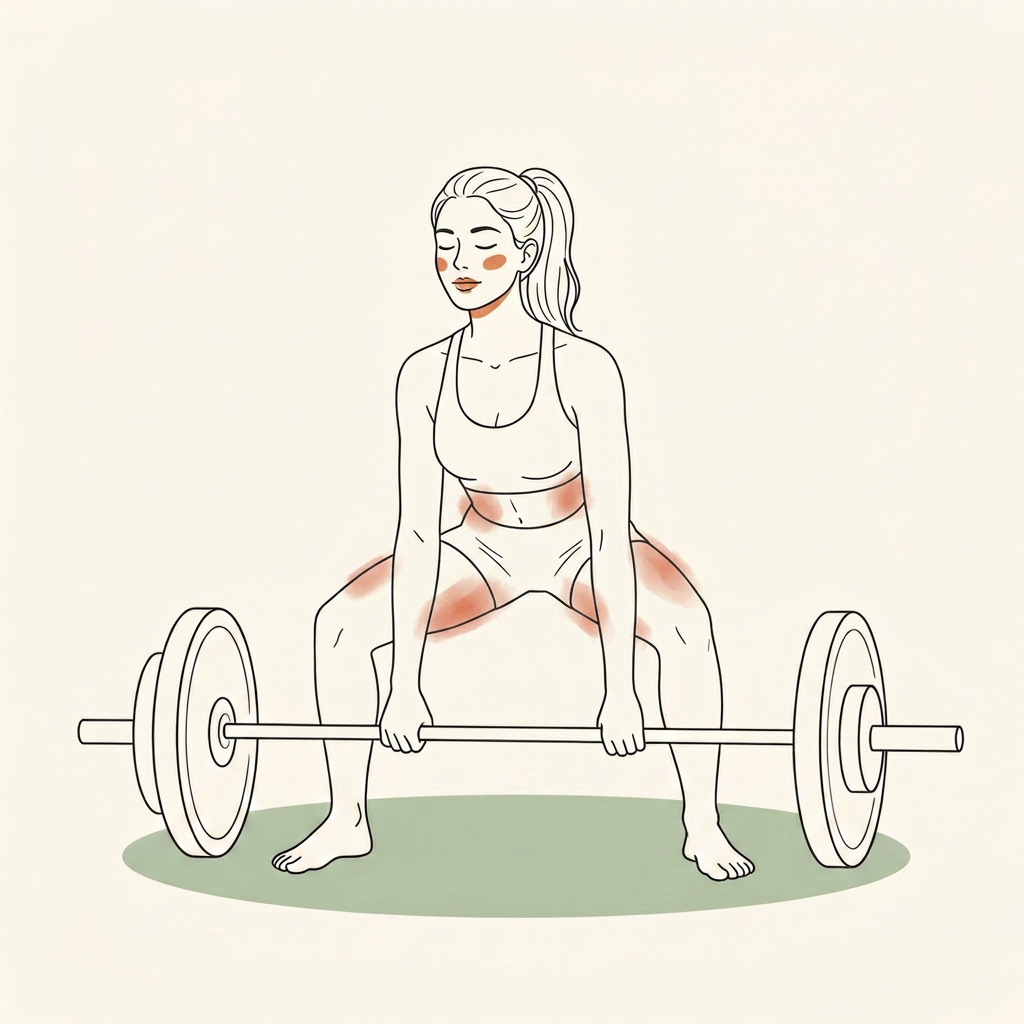
Back Squat or Goblet Squat
3-5 reps
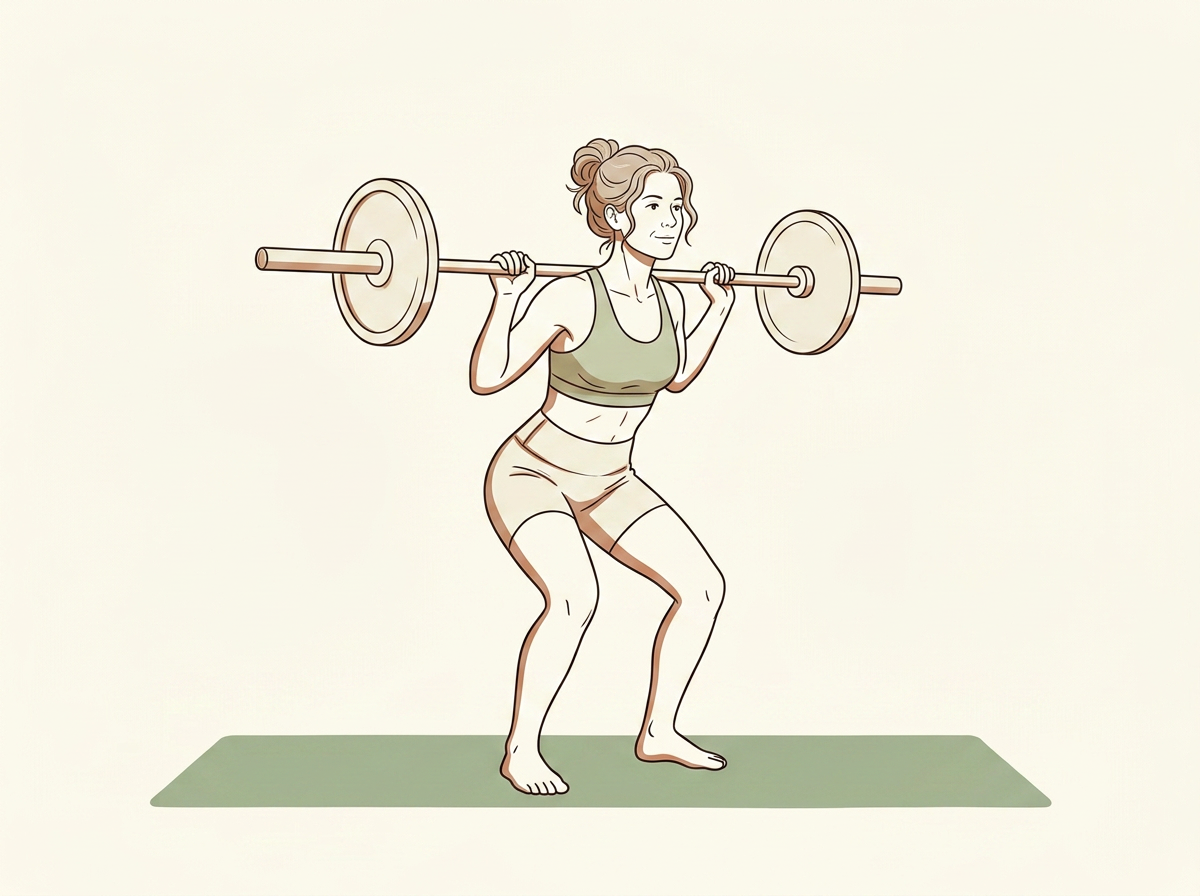
Stand with your feet slightly wider than hip-width and your spine tall. Sit your hips back and down as if reaching for a chair, keeping your chest lifted and heels grounded. Lower until your thighs are parallel to the floor, then press firmly through your feet to return to standing. Exhale as you stand up, gently lifting your pelvic floor rather than pushing down against it. Avoid letting your knees cave inward or your lower back round at the bottom. You should feel this work in your glutes and thighs while your core stays steady and supportive. Choose a weight heavy enough that the last two reps are a real effort while your form stays clean. When every set feels comfortable at the top of the rep range, add a little weight next week, and go lighter on deload weeks.
0 / 5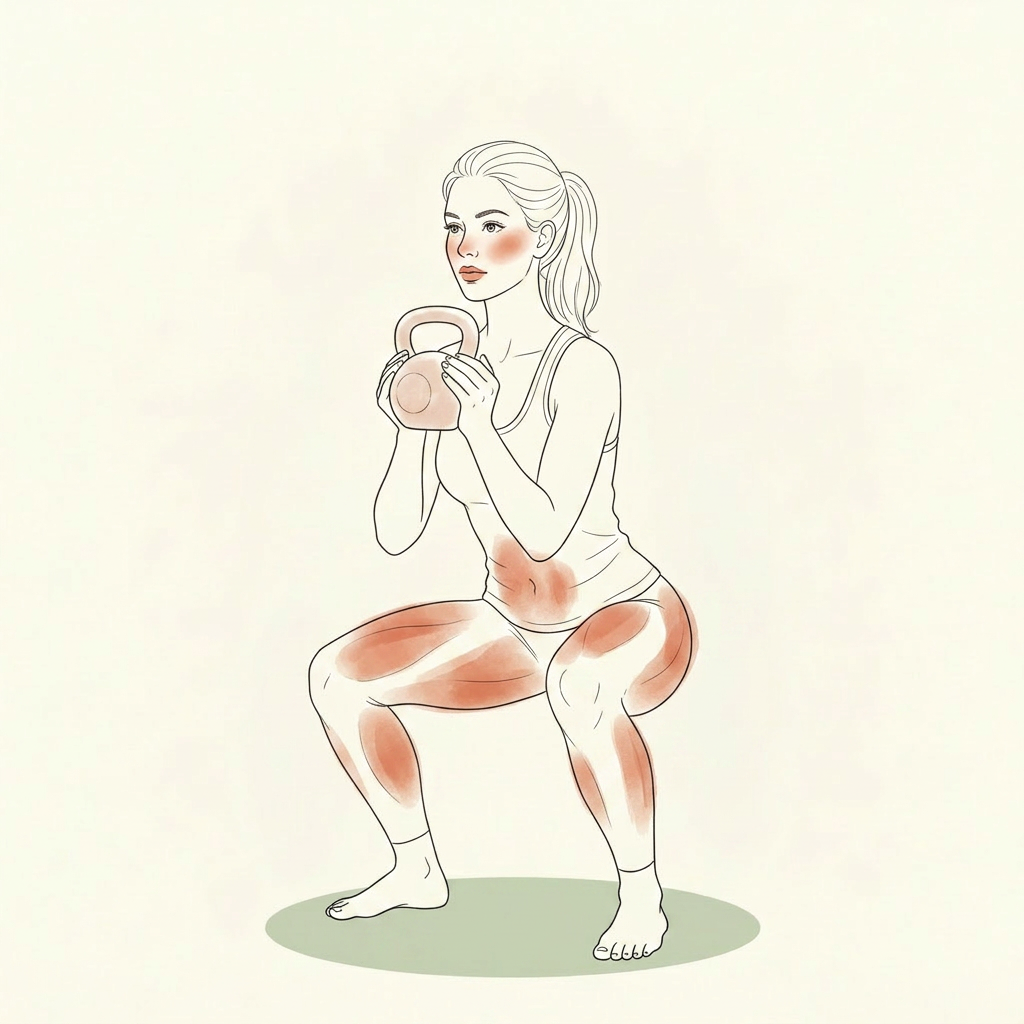
Overhead Press
3-5 reps
Stand with your feet hip-width apart and your ribcage stacked directly over your hips to create a stable base. Hold the weights at shoulder height with your elbows slightly forward. Press the weights straight up toward the ceiling until your arms reach a full lockout, then lower them back down with control. Exhale as you push upward, imagining your breath lifting away from your pelvic floor rather than pushing down against it. Avoid arching your lower back to finish the lift. You should feel your shoulders and upper back working hard while your core stays firm and steady. Choose a weight heavy enough that the last two reps are a real effort while your form stays clean. When every set feels comfortable at the top of the rep range, add a little weight next week, and go lighter on deload weeks.
0 / 5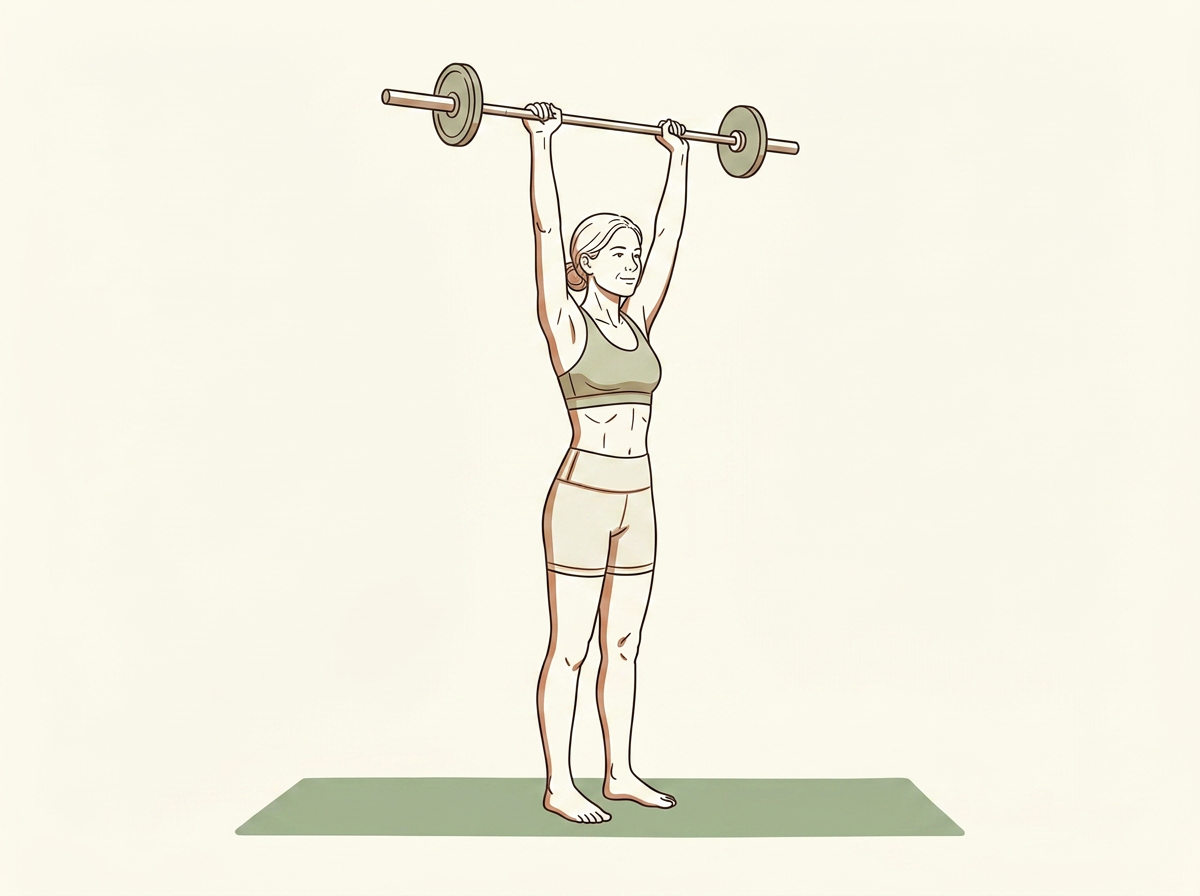
Weighted Pull-Up or Bent-Over Row
3-5 reps
Stand with your feet hip-width apart and a slight bend in your knees, hinging forward with a long, flat back. Hold the weight with arms extended, then pull it toward your hip by driving your elbow back and squeezing your shoulder blade toward your spine. Exhale as you lift the weight, keeping your pelvic floor lifted rather than pushing downward. Focus on using your back muscles rather than pulling only with your arm. Avoid letting your shoulders hunch up toward your ears or rounding through your spine. You should feel a steady engagement across your mid-back and behind your shoulder. Choose a weight heavy enough that the last two reps are a real effort while your form stays clean. When every set feels comfortable at the top of the rep range, add a little weight next week, and go lighter on deload weeks.
0 / 5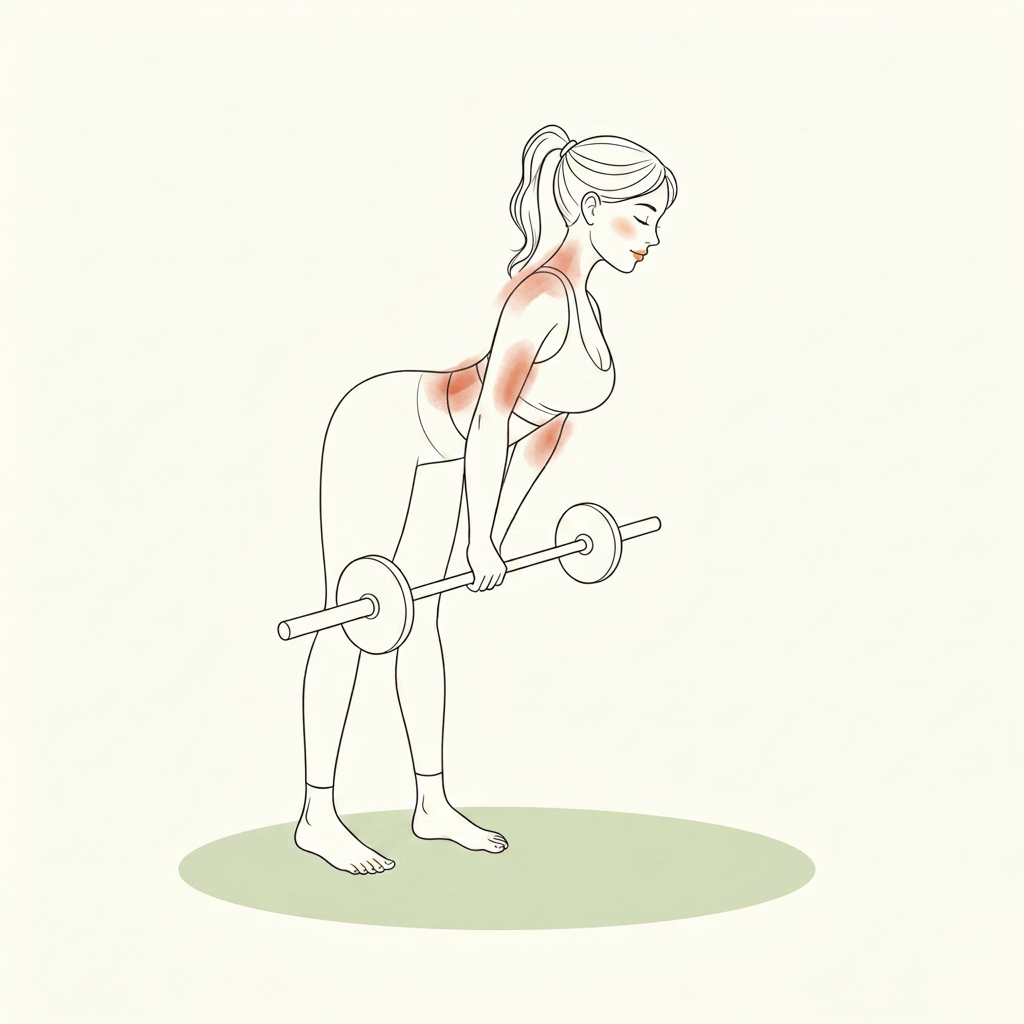
Cool-down
Inchworm Walk-Out to Plank
180 seconds
Stand tall with your feet hip-width apart. Soften your knees and fold forward, placing your hands on the floor in front of your feet. Walk your hands out slowly, one at a time, until you reach a strong plank with your shoulders over your wrists. Exhale as you arrive in plank, gently lifting your pelvic floor and drawing your belly in so your hips stay level and do not sag. Pause for a breath, then walk your hands back towards your feet and roll up to standing. Move slowly and bend your knees as much as you need to.
Wide Glute Bridge
240 seconds
Lie on your back with knees bent and feet planted wider than hip-width, toes turned slightly out. Breathe in to prepare, then exhale, gently lift your pelvic floor and press through your heels to raise your hips until your body forms a line from knees to shoulders. Squeeze your glutes at the top, then lower slowly back to the mat. Keep your ribs soft and avoid arching your lower back or letting your knees fall inwards. You should feel the work in your glutes and outer hips.
Tags